
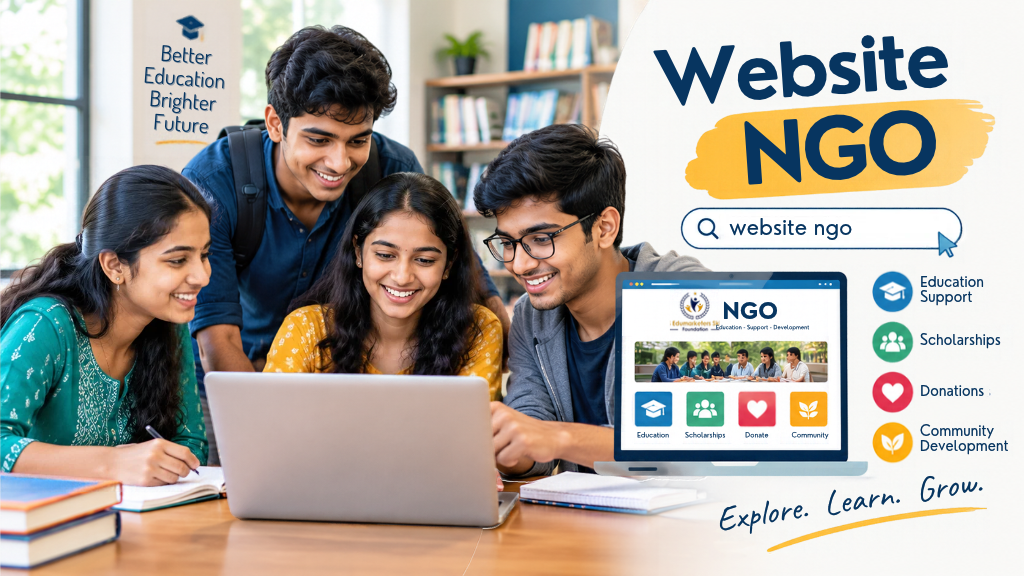
If you are looking for NGOs that offer services for education, health, skills development, women’s empowerment and community services then searching for their ngo website will give you an insight into what they do. You will need to determine if the information on their site is accurate and whether their services are relevant to you.
A trustworthy NGO site can be a great place to start for students and parents looking into educational advice, scholarships and other student support services. Donors can also use them to understand their mission statement, projects and donation process.
This guide will tell you how to search NGO sites in India, what information should be checked, how education NGO sites can help students and how to find relevant resources using SS Education Foundation.
What Is an NGO Website?
An NGO website is used by a non government organization to provide information about their cause, activities and services they offer.
Unlike sales-focused websites, NGO websites explain their community work, services, and initiatives. Additionally, they help people contact the organization and learn about its latest activities. As a result, visitors can better understand its mission and community impact. Some of the content you may find on an NGO website are:
- Education information and support for students.
- Announcements and eligibility for scholarships.
- Skill development and vocational training.
- Community development and awareness.
- Volunteering and donation information.
- Contact information, sign up forms and ways to enquiry.
Reports, accomplishments and other information relating to the organization.
Not all NGOs will have all of these services so it is a good idea to look at each website to see what they offer.
Why Are NGO Websites Useful in India?
A well-maintained NGO website can help people access information without visiting an office first. It can also make it easier to understand an organisation’s work before contacting its team.
1) Support
You can go to an NGO organisation which can help students by giving them support on finding information about scholarships, what courses they should do, tips about applications or even some financial support depending on what organisation you go to.
Its important to know what the requirements are to see if you can get financial support.
2) Parents
Parents may want to know more about educational opportunities, application requirements, training courses and career opportunities. You can go to the NGOs website to see what they can help you with.
For example, parents may want to know more about becoming a nurse or going to a polytechnic. Students can learn about eligibility requirements, recognised institutions, course duration, and application procedures. Additionally, they can contact the organisation for further guidance before applying.
3) Donors
People who want to help with social issues can go to the NGOs website to find out more about their missions, what they do, are they transparent with their finances and how to donate.
Before donating to an organisation it’s important to make sure they’re genuine and that everything they say regarding tax and donations is true.
4) Community
NGO websites help communities learn about education, training courses, and community development. Moreover, they encourage people to raise awareness and participate in local initiatives. As a result, communities can discover opportunities to learn and grow.
Depending on where you are and what programme they have there may be lots of options. Its best to contact the organisation directly to find out what they can offer.
Types of NGO Websites You Can Explore
Different NGO sites serve different audiences. Identifying the right type can save time and help you find relevant information.
| Type of NGO website | Main purpose | Who may benefit? |
| Education NGO website | Educational guidance and student support information | Students and parents |
| Skill development NGO website | Vocational training and practical skills | Young people and job seekers |
| Healthcare NGO website | Health awareness and related community programmes | Individuals and communities |
| Women empowerment NGO website | Women’s education, skills and empowerment initiatives | Women and girls |
| Community development NGO website | Awareness, welfare and local development | Communities and volunteers |
| NGO donation website | Information about contributions and supported projects | Donors and supporters |
These categories can overlap. For instance, an education-focused NGO may also work in skill development or women’s empowerment.
How To Find Reliable NGO Websites
Just because an organisation can be found on an internet search engine does not mean it is real or that they provide the services. Here are some steps you can take.
Step 1: Mission Statement
Check out the About Us section of the site. Does it state clearly what the organisations mission is? Are they stating who they aim to help, where they operate and what they offer?
If you require education help look for organisations that have stated what they do in relation to helping students.
Step 2: Registered Information
Does the organisation have a registered name? Are their office address, contact details and any relevant registration details?
If possible, check this information against official Government sources. There are sources such as the NGO Darpan Portal in India to give you more information on NGOs. However this does not guarantee the organisation is real, provides quality services or that they are eligible.
Step 3: Service Details
Does the organisation provide clear information on:
Who can apply?
What documents may be required?
Any costs?
How applications are assessed?
Are they currently taking applications?
How to get in touch with the organisation?
Be wary of sites that claim to guarantee you a scholarship, admission or job with no explanation.
Step 4: Donation Details
Before donating to an organisation, check its background, projects, payment methods, and tax documentation. This way, you can understand how it operates and make an informed decision.
In India there will be tax benefits depending on the legal requirements and what approvals the organisation has. You cannot assume that all donations to an NGO will be tax deductible.
Ensure payments are made via official channels. Do not send money to personal accounts unless you have checked independently.
Step 5: Get In Touch
If you need more information, contact the organisation directly. This way, you can confirm your eligibility, understand the services offered, and learn how to apply. As a result, you can make a more informed decision.
Before making an important decision, always check with the relevant institution or authority. This will help you confirm course recognition, understand admission requirements, and review scholarship terms. As a result, you can make a more informed choice.
What Should the Best NGO Websites Include?
When comparing the best NGO websites for your needs, do not rely only on appearance or search ranking. A useful website should make it easy to understand the organisation and take an appropriate next step.
Clear information
The organisation’s mission, services and target beneficiaries are explained in simple language.
Accessible contact details
Visitors can find an email address, phone number or other appropriate contact channel.
Transparent programme details
The organisation should clearly explain eligibility, availability, application steps, and any limitations. This way, applicants can understand the requirements and plan their next steps.
Relevant evidence
Project updates, reports and organisational details help visitors understand the work being carried out.
Mobile-friendly design
Students and families can read information and access forms on their phones.
These are practical evaluation criteria, not a claim that any particular NGO has been independently audited. Google’s own guidance also recommends useful, trustworthy and people-first website content. Read Google’s helpful content guidance.
Google for Developers
NGO Website List: Where Should You Start?
People searching for an NGO website list may be looking for organisations by location, purpose or service. Rather than relying on an unverified ranking of the top NGO websites, use the following approach to build a shortlist.
| Your requirement | What to look for | What to verify |
| Education support | Education-focused NGO sites | Actual services and eligibility |
| Scholarships | NGO and official scholarship resources | Application dates and selection criteria |
| Skill development | Training and vocational programme websites | Course details and current availability |
| Donations | Official NGO donation pages | Organisation identity and payment details |
| Community projects | NGO project and activity pages | Location and ongoing activities |
When compiling your own list, record each organisation’s official website, location, main activities and contact details. Add the date when you checked the information so that you can revisit outdated listings.
A list should help readers compare relevant resources, not imply that one organisation is the best for every student or donor.
Explore SS Education Foundation’s Website
For those wishing to look at education related options, the SS Education Foundation can be looked at. The foundation focuses on providing education, student development, skill development and community development within India.
Their website can be looked at to see what services they provide.
Go to the SS Education Foundations homepage.
From here look at their Services page to get an idea of what education related services they provide.
Skill Development
To look at skill development opportunities, go to the PMKVY Project Page. This will provide an idea of what opportunities are currently available, and what criteria you will need to meet.
Student Registration
To get an idea of what options may be available to help students, go to the student registration form.
Read through the instructions provided and ensure you meet any criteria. Registering or enquiring does not guarantee you a scholarship, place, fee help or job.
The aim of looking at the education NGO website is to gain accurate information and know what options are available to you. It is not guaranteed that you will have access to all the services provided.
Common Mistakes to Avoid When Using NGO Sites
A little caution can prevent confusion and help you choose appropriate resources.
- Verify important statements from official/primary sources
- Assume funding will be provided Read the terms and conditions to confirm you are eligible.
- Don’t worry about contact details Make sure you know who you are dealing with before sending any documents or money.
- Avoid relying on outdated information. Instead, check the publication date and contact the organisation directly. This way, you can confirm its current services and available support.
- Don’t choose a website based on how it looks Just because a website looks professional doesn’t mean it is genuine.
- Think donations = help for students Don’t assume just because there is a donations page there is an educational support programme. Check the terms and conditions of both.
A reliable decision comes from checking the information, understanding the requirements and asking questions when necessary.
Frequently Asked Questions
Website NGO
These are some common terms which may be used to find various NGOs. This will give you information about the organisation itself, what they do, what services they provide and how to contact them or support them.
Education NGO Sites in India
Look for organizations that provide education and view their official site to see what services they have to offer. Look to see what they have to offer and make sure they have the correct registration and programme information.
Before applying for support from a student NGO.
Make sure you know who the organisation is, what programmes they provide, what you require to be eligible, what documents you need, how to apply and contact details. This will also make sure you know if there are any key requirements before giving out your personal information.
Are all NGO websites providing scholarships?
No, some will provide information regarding scholarships or education support, others may focus on health care, community development or different causes. Even those that focus on education may have certain requirements.
How do I know if an NGO donation site is legitimate?
Make sure you know who the organisation is (registered), their contact details, what projects they have and what payment method they take. Make sure any tax benefits they mention are legitimate. Don’t be deceived by how it looks.
How can students contact the SS Education Foundation?
Go to the official SS Education Foundation website and view their Services page. If there are any relevant opportunities available view the student registration form and follow the instructions.
Conclusion
A good place to start researching your NGO will be online. However, you will need to find the correct website depending on what you need. Students should look into what services they offer and if they are eligible. Donors should look into verifying who they are and how donations work.
Take your time to research different NGO websites. Read through what information they have available and ensure that you know key details. If you are a student looking for educational advice, you can look at the official site of the SS Education Foundation to see what services they provide.
If you are looking for educational advice, visit the SS Education Foundation. See what services they provide and if there are any published resources to help students like you.